
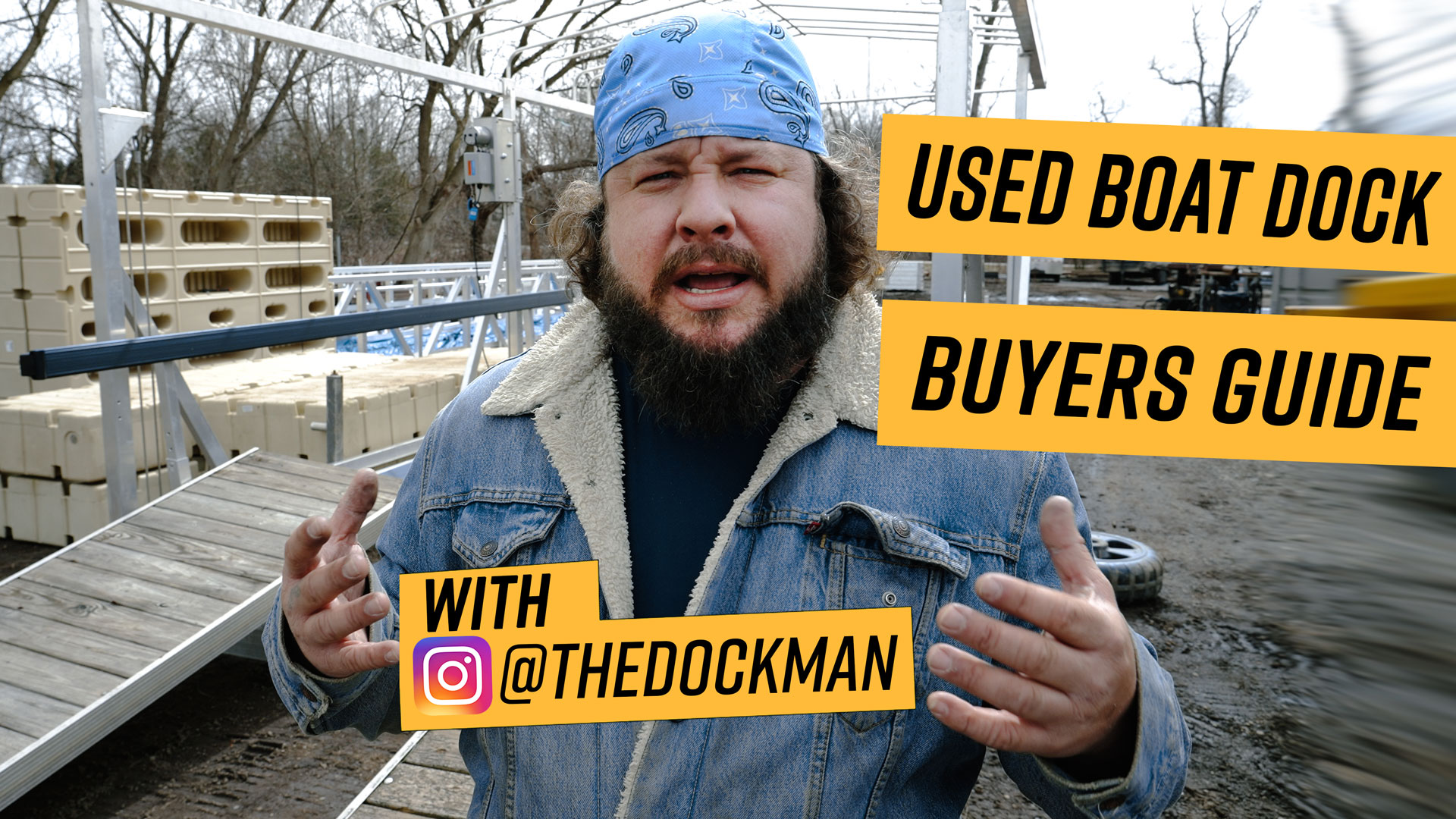
A Used Dock Buyers Guide with The Dockman
What to Look for When Buying a Boat Dock
Purchasing a boat dock is a big investment, and if you’re considering buying used, there are a few important things you’ll want to check before making a decision. A dock that looks like a bargain can quickly turn into a money pit if it’s unsafe, poorly built, or near the end of its lifespan. Here’s what you should know before you commit:
Start With Your Water Conditions
Before you start shopping, take time to survey your site. Measure the depth of your water and understand the bottom conditions—whether it’s sand, muck, or rocky. This will determine what type of dock legs, poles, or supports you’ll need. Skipping this step can leave you with a dock that simply doesn’t work for your location.
Be Cautious With Wood Docks
Wood is the most common material for used docks, but it’s also the riskiest. Many wood docks hit the resale market when they’re already near the end of their usable life. Look for cracks, splintering, or moss growth, and make sure the decking boards are still securely bolted to the frame. Even if the dock looks solid, wood requires constant upkeep and typically won’t last as long as modern, maintenance-free alternatives.
Choose the Right Leg Supports
Not all dock frames are built the same. The most common support system you’ll see on the used market is a casted cross-arm clamp, which squeezes around a pole and adjusts for height. The problem? These clamps wear out, strip, and eventually make it impossible to level your dock. A welded cross-arm system, on the other hand, is far more durable and much easier to maintain.
Floating Docks Require Extra Attention
If you’re looking at floating docks, make sure they still float properly. Check for signs of water inside the floats, cracks, or makeshift repairs. Homemade floating docks built with foam are especially risky—foam deteriorates under UV rays, absorbs water, and can even become an environmental hazard. In most cases, you’ll want to avoid these altogether.
Invest in Durable Materials
For long-term reliability, look for docks made from anodized aluminum or polyethylene (such as Sunwalk). These materials are low maintenance, resistant to damage, and built to last. While you’ll rarely find them on the used market, purchasing new often comes with warranties and the assurance that your dock will serve you well for years.
Final Thoughts
Buying a dock isn’t just about finding the lowest price—it’s about choosing something safe, stable, and built for your conditions. Survey your water, carefully inspect materials, and when possible, invest in high-quality options like aluminum or polyethylene. The right dock will give you peace of mind and a better experience on the water for many seasons to come.
 Previous Post
 Next Post