
Floating Dock vs Stationary Dock: Which Dock System Is Best for Your Lakefront Property?
When people call us about a new dock, one of the first questions we ask is simple:
What does your water do throughout the season?
The answer usually determines whether a floating dock or a stationary dock is the better solution.
As someone who spends most of his spring, summer, and fall installing docks across Michigan, I’ve seen both systems perform exceptionally well when matched to the right conditions. I’ve also seen plenty of dock owners struggle because they chose a dock style that wasn’t designed for their shoreline.
If you’re researching EZ Dock floating docks, comparing floating dock options, or trying to decide between a floating and stationary dock system, here’s what you need to know.
When a Floating Dock Makes Sense
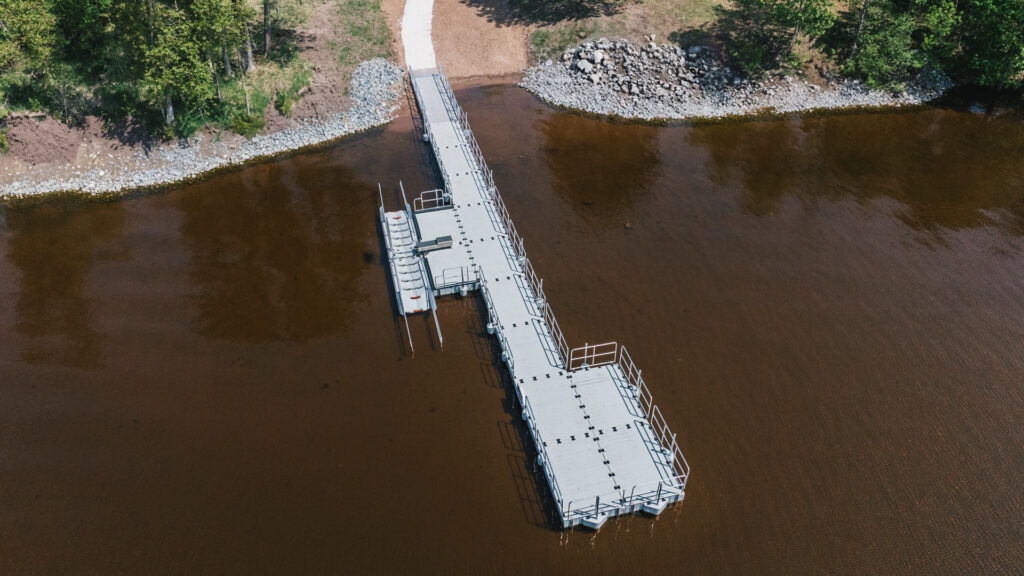
Floating docks are designed to move with the water. Rather than standing on legs driven into the lake bottom, they float on buoyant chambers, foam-filled sections, or floating cubes.
As water levels rise and fall, the dock rises and falls with them.
This makes floating docks an excellent choice for:
- Lakes with changing water levels
- Rivers with seasonal fluctuations
- Reservoirs
- Deep water shorelines
- Areas where traditional dock legs become difficult to adjust
One of the biggest advantages is convenience.
Because the dock moves with your boat, the distance between your boat and the dock remains relatively consistent. Getting in and out of your watercraft is easier throughout the season, even when water levels change dramatically.
Floating docks also simplify boat mooring. You can secure your vessel tightly to the dock without worrying about water levels dropping and leaving your boat hanging from the cleats.
EZ Dock and Modular Floating Dock Systems
Many waterfront property owners begin their search by looking at EZ Dock systems. EZ Dock is one of the most recognized floating dock brands in the industry because of its modular design and versatility.
Floating systems can often be expanded, reconfigured, or customized as your boating needs change. They also pair well with:
- Personal watercraft ports
- Kayak launches
- Paddleboard storage
- Swim platforms
- Fishing extensions
At Waters Edge Dock & Hoist, we help property owners evaluate whether a floating dock system is the best fit for their shoreline, water depth, and recreational goals.
Drawbacks of Floating Docks
No dock system is perfect.
Because floating docks move with wave action, they can feel less stable during rough conditions. In areas with frequent boat traffic, heavy wakes, or severe storms, you’ll notice more movement compared to a stationary dock.
That’s why site conditions matter so much when selecting a dock.

When a Stationary Dock Makes Sense
Stationary docks are often the preferred choice on many Michigan inland lakes.
Unlike floating docks, stationary systems rest on legs or supports and create a rigid platform that feels solid underfoot.
At Waters Edge Dock & Hoist, many of our stationary dock installations feature Great Lakes Lift & Dock aluminum dock systems, which are among the most robust and durable dock products available in the marine industry.
Stationary docks are ideal for:
- Stable water levels
- Inland lakes
- Areas with frequent boat traffic
- Rougher water conditions
- Homeowners who want a more solid feel
Stability Matters
One of the biggest reasons people choose a stationary dock is stability.
A properly installed stationary dock feels much like an extension of your shoreline. It doesn’t bounce underfoot and provides a stable platform for:
- Entertaining guests
- Outdoor furniture
- Swimming access
- Fishing
- Heavy boat lift installations
If you’re spending weekends hosting family and friends on the water, that stability can make a significant difference.
Durability in Challenging Conditions
Stationary docks also perform exceptionally well in areas exposed to:
- Frequent boat wakes
- Wind-driven waves
- Heavy recreational traffic
- Storm conditions
Their rigid design allows them to withstand forces that may cause floating systems to move excessively.
Drawbacks of Stationary Docks
The primary limitation is changing water levels.
If water levels rise or fall significantly throughout the season, your dock height remains fixed. This can make boarding a boat more difficult and may require adjustments to dock sections or boat lift configurations.
Fortunately, many modern aluminum dock systems are modular and adjustable, allowing property owners to modify layouts as their waterfront needs evolve.
What About Permanent Docks?
Permanent docks are another option entirely.
These structures are driven deep into the lakebed and remain in place year-round. While permanent docks offer incredible durability in the right locations, they typically involve more extensive permitting, construction requirements, and higher installation costs.
For many Michigan waterfront property owners, a seasonal stationary dock or floating dock system provides the perfect balance between performance and flexibility.
Dock Accessories Make a Difference
Whether you choose a floating dock or a stationary dock, the right accessories improve safety, functionality, and convenience.
Waters Edge Dock & Hoist offers accessories for both systems, including:
- Dock bumpers
- Mooring cleats
- Personal watercraft ports
- Kayak launches
- Swim ladders
- Dock lighting
- Safety accessories
- Storage solutions
The right combination of accessories can transform a basic dock into a complete waterfront experience.
Which Dock Is Right for Your Property?
The best dock isn’t determined by brand names or trends.
It’s determined by your water conditions, shoreline characteristics, boating habits, and long-term goals.
If your water levels fluctuate significantly, a floating dock may be the smartest investment.
If your lake remains relatively stable and you want maximum rigidity and strength, a stationary dock system from Great Lakes Lift & Dock may be the better fit.
At Waters Edge Dock & Hoist, we install floating docks, stationary docks, boat lifts, and complete waterfront systems throughout Michigan. We’ll help you evaluate your shoreline and recommend the solution that provides the best performance for your property.
Because the right dock isn’t just about today—it’s about enjoying your waterfront for years to come.
Need help choosing between a floating dock and a stationary dock? Contact Waters Edge Dock & Hoist today to schedule a shoreline consultation and find the best docking solution for your lakefront property.
 Previous Post
 Next Post